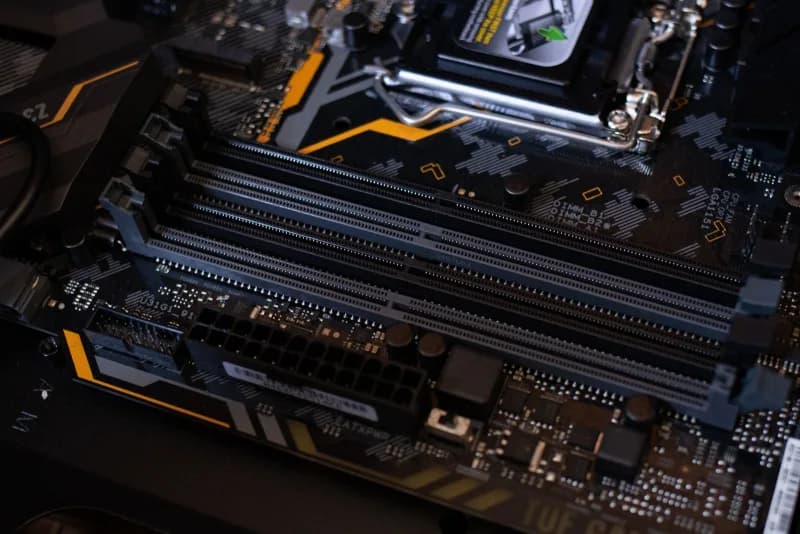

Apple didn't hold a keynote. On the morning of Tuesday, August 25, 2026, it just published a press release and dropped the biggest Mac silicon update since the M1 Ultra in 2022: the M6, Apple's first 2-nanometer chip, debuting in a redesigned Mac mini, and the M5 Ultra, a quad-die monster debuting in a refreshed Mac Studio. Pre-orders opened the same day; both machines reached customers on September 22, 2026.
Six weeks later, the reviews are in and the picture is clear. This wasn't a routine spec bump. It was Apple planting a flag in local AI compute, with prices to match. Here's everything the two chips are, what Apple claims, what independent testing found, and whether either machine makes sense for you.
Key takeaways
- Apple announced the M6 and M5 Ultra on August 25, 2026; both shipped September 22 with macOS 27 "Golden Gate."
- M6 is Apple's first 2nm chip (TSMC N2): 12-core CPU, 12-core GPU with per-core Neural Accelerators, Dual 16-core Neural Engine, up to 32GB memory. Mac mini starts at $899.
- M5 Ultra is Apple's first quad-die chip: two M5 Max dies fused via next-gen UltraFusion, up to 36 CPU cores, 80 GPU cores, 1.2 TB/s bandwidth, up to 512GB unified memory. Mac Studio starts at $5,499.
- Apple's performance claims are aggressive (up to 3.9x AI gains for M5 Ultra); independent reviews found roughly 30% CPU and up to 63% GPU uplifts over M3 Ultra-class hardware.
- The strategic story is local AI: Apple wants developers running and fine-tuning large models on a Mac instead of renting cloud GPUs.
M6: Apple's first 2-nanometer chip
The process node is the headline. M6 is the first Apple silicon fabricated on TSMC's 2nm node, a jump from the 3nm process used across the M4 and M5 generations. Smaller transistors mean more of them in the same area, which generally buys both performance and power efficiency, plus room for more specialized blocks like the Neural Engine and GPU-side AI accelerators.
The configuration: a 12-core CPU split into a three-tier design Apple hasn't used before, with 2 "super cores" for burst workloads, 4 performance cores, and 6 efficiency cores. The 12-core GPU puts a Neural Accelerator in every core for faster matrix math, and the Dual 16-core Neural Engine doubles peak on-device AI compute versus previous generations, according to Apple. Unified memory bandwidth hits 170 GB/s, with configurations up to 32GB.
Apple's performance claims for M6: the world's fastest single-threaded CPU performance (its words), up to 1.2x faster multithreaded performance than M5 and up to 2.4x faster than M1, nearly 30% more peak GPU AI compute than M5, and more than 8x compared to M1. Graphics get hardware-accelerated ray tracing and Dynamic Caching carried forward. Notably, Apple did not publish a Neural Engine TOPS figure for either chip, which stands out given how aggressively Qualcomm and AMD lead with TOPS numbers in AI PC marketing. Apple is selling capabilities, not a spec-sheet number.
The M6 debuts in a new Mac mini starting at $899, with a carryover M5 Pro configuration also available. That starting price is up from the previous generation, and reviewers flagged that the increase undercuts the Mac mini's long-standing value positioning.
M5 Ultra: the first quad-die M chip
If M6 is about the process, M5 Ultra is about packaging. It's Apple's first "quad-die" chip: two dual-die M5 Max processors fused together with a next-generation version of Apple's UltraFusion interconnect, making it appear to software as a single giant processor. This is the same trick Apple used to build the M1 Ultra and M2 Ultra from Max dies, taken one level further.
The numbers: up to 36 CPU cores, up to 80 GPU cores, 1.2 TB/s of unified memory bandwidth (50% more than M3 Ultra), and up to 512GB of unified memory. That memory figure is the real story. With half a terabyte of unified memory, Apple says Mac Studio users can store large datasets locally, increase tokens per second, and run large language models with hundreds of billions of parameters entirely on device. The top 512GB configuration ships in late October 2026, a few weeks after the base models.
The M5 Max, which shares the refreshed Mac Studio lineup, is no slouch either: an 18-core CPU (6 super cores, 12 performance cores), up to 40-core GPU with Neural Accelerators, up to 128GB of memory, and 614 GB/s of bandwidth. Apple claims up to 3.9x faster AI performance than the prior generation for M5 Max, with up to 10.7x faster LLM prompt processing and 7.4x faster text-to-image generation compared to M1 Max.
The Mac Studio with M5 Ultra starts at $5,499, a serious price for a serious machine. Reviewers consistently called it a specialist buy: worth it for high-end creative work and local AI development, hard to justify as a general-purpose desktop.

What independent reviews found
Launch claims are marketing; six weeks of testing is data. The independent picture, aggregated from early reviews:
The Verge measured about a 30% CPU uplift for the M5 Ultra over a similarly configured M3 Ultra, and recorded up to a 63% GPU uplift in Cinebench. Engadget reported SSD write speeds near 14 GB/s on some Studio units. Those are healthy generational gains, though notably smaller than Apple's most aggressive AI-workload claims, which is the usual gap between vendor-optimized benchmarks and general testing.
The practical limits reviewers flagged are about memory, not compute. The base Mac mini's 16GB of unified memory can force swapping when running larger local models; reviewers recommend 32GB or higher for serious on-device AI work. And Apple's warning proved accurate: the 512GB Mac Studio configurations won't ship until late October.
The strategy: Apple wants your AI workloads local
Step back from the specs and the strategy is the interesting part. Apple is pushing deeper into a fight it wasn't originally supposed to be in: local AI compute for developers and small AI shops who don't want to rent a cloud GPU cluster. Every element of this launch serves that thesis: the per-core Neural Accelerators in the GPU, the doubled Neural Engine, the 512GB memory ceiling, the explicit "run LLMs on device for secure and private agentic tasks" messaging in Apple's own materials.
It's a direct challenge to the assumption that meaningful AI work requires cloud infrastructure. Whether developers buy in depends on software: model support, framework optimization, and whether the economics of a $5,499 workstation beat cloud GPU rental for a given workload. But Apple has now built the hardware side of the argument, and it's the most capable local-AI machine the company has ever sold.
For developers tracking the AI tooling landscape, this lands alongside other 2026 shifts: GitHub Copilot's model retirements are reshaping AI-assisted coding, and Apple's foldable iPhone shows the company is willing to make big hardware bets this cycle.
Should you buy one?
The Mac mini with M6 at $899 is the rational pick for most people: a fast, efficient desktop with genuinely improved on-device AI, though the price hike stings relative to the mini's budget heritage. Configure it with 32GB if local AI is in your plans; 16GB is fine for everything else.
The Mac Studio with M5 Ultra at $5,499 is for a specific buyer: video professionals, 3D artists, ML developers, and AI researchers who can use 80 GPU cores and hundreds of gigabytes of unified memory daily. If that's not you, the M5 Max configuration gets you most of the experience for less.
Everyone else: these chips also set the template for the M6 Pro, Max, and Ultra generations coming to MacBook Pro hardware down the line. If you're on Apple silicon from the M1/M2 era and feeling no pain, waiting costs you nothing.
Practical next steps
- Buying now: Mac mini buyers should prioritize the 32GB memory upgrade over CPU options if local AI matters; it's the binding constraint reviewers identified.
- Mac Studio buyers: confirm whether your workload needs the 512GB configuration (late October ship) or whether 128GB/192GB tiers suffice; don't pay for memory you'll never address.
- Developers: test your models against the Neural Engine and GPU Neural Accelerators specifically; Apple's AI gains are concentrated there, not in general CPU benchmarks.
- Everyone: Apple's performance claims (1.2x, 3.9x, 10.7x) are workload-specific best cases. Independent reviews (~30% CPU, ~63% GPU gains) are the planning numbers.
The bottom line
The M6 and M5 Ultra are Apple's most consequential Mac chips since the M1, and not just because of the 2nm process or the quad-die packaging. They're the hardware expression of a strategic bet: that the future of AI development includes a serious local option, and that Apple can own it. The M6 Mac mini at $899 brings that future to a (relatively) accessible price; the $5,499 M5 Ultra Mac Studio is the no-compromise version. Both shipped September 22, both run macOS 27, and both ask the same question of buyers: how much of your AI work do you want to own outright?
Sources
- https://daringfireball.net/linked/2026/08/25/m6-and-m5-ultra-chips
- https://www.thebrief.news/en/standard/article/15264/apple-unveils-the-m6-and-m5-ultra-two-new-chips-two-different-strategies
- https://particle.news/story/apple-releases-m6-mac-mini-and-m5-maxm5-ultra-mac-studio
- https://tech-insider.org/apple-m6-m5-ultra-2026/
- https://frontbackgeek.com/apple-unveils-m6-and-m5-ultra-chips-with-new-mac-mini-and-mac-studio/
- https://revealednews.com/hardware/apple-unveils-m6-chip-in-mac-mini-and-m5-ultra-in-redesigned-mac-studio-lineup
Quick answers
Frequently asked questions
01
When were the Apple M6 and M5 Ultra announced and released?
Apple announced both chips on August 25, 2026, via press release. Pre-orders opened the same day, and both the M6 Mac mini and the M5 Max/M5 Ultra Mac Studio became available on September 22, 2026, shipping with macOS 27.
02
What is the Apple M6 chip?
The M6 is Apple's first chip built on a 2-nanometer process (TSMC N2). It debuts in the Mac mini with a 12-core CPU (2 super cores, 4 performance cores, 6 efficiency cores), a 12-core GPU with Neural Accelerators in each core, a Dual 16-core Neural Engine, and up to 32GB of unified memory. The Mac mini starts at $899.
03
What is the Apple M5 Ultra?
The M5 Ultra is Apple's most powerful chip, debuting in the Mac Studio. It's the first quad-die M-series processor, fusing two dual-die M5 Max chips with next-generation UltraFusion technology. It offers up to 36 CPU cores, up to 80 GPU cores, 1.2 TB/s of memory bandwidth, and up to 512GB of unified memory. The Mac Studio with M5 Ultra starts at $5,499.
04
How much faster are the M6 and M5 Ultra?
Apple's claims: M6 delivers up to 1.2x the multithreaded CPU performance of M5 and nearly 30% more peak GPU AI compute. For M5 Ultra, Apple claims up to 3.9x faster AI performance than the prior generation. Independent reviews found roughly 30% CPU and up to 63% GPU uplifts for M5 Ultra over a similarly configured M3 Ultra.
05
Can the M5 Ultra run large AI models locally?
That's Apple's pitch. With up to 512GB of unified memory (the top configuration ships in late October 2026), Apple says the Mac Studio can run large language models with hundreds of billions of parameters entirely on device. Reviewers recommend at least 32GB for serious local AI work on the Mac mini.
06
How much do the new Macs cost in 2026?
The M6 Mac mini starts at $899 and the Mac Studio with M5 Ultra starts at $5,499. Reviewers noted both prices climbed noticeably from the previous generation, undercutting the Mac mini's traditional value positioning.