Crypto in 2026 is a strange mix of boring and wild. Boring, because Bitcoin ETFs now sit in retirement accounts, regulators on both sides of the border are writing actual rulebooks, and stablecoins are edging into payment systems. Wild, because Bitcoin still moves 5% in a day, ETF demand just fell off a cliff in a single week, and the scams have never been more sophisticated.
This is a starter guide for Canadians: where the market stands, what has genuinely changed, how to buy without getting burned, how the tax rules work, and the risks, stated without sugarcoating.
Financial information, not financial advice. This article is general educational information for readers in Canada, current as of October 2026. Crypto assets are volatile and you can lose some or all of your money. Nothing here is a recommendation to buy or sell anything. Consider speaking with a licensed advisor before investing.
Key takeaways
- Bitcoin trades around $81,000–87,000 USD in early October 2026, up about 47% from its recent low but still below where the year opened. The total crypto market is worth about $2.92 trillion.
- The regulated path exists in Canada. Registered platforms and Canadian Bitcoin ETFs let you buy without touching an offshore exchange, and you can even hold ETF exposure inside a TFSA or RRSP.
- Regulation is advancing but incomplete. A federal Stablecoin Act received Royal Assent in March 2026 but is not yet in force; crypto tax reporting rules are still working through Parliament.
- The CRA taxes crypto. Gains are generally capital gains (or business income for active traders), and every sale or swap is a taxable event.
- Risks are prominent and real: extreme volatility, irreversible transactions, exchange failures, and industrial-scale scams. Size any position so that losing it entirely would not change your life.
Where crypto stands in October 2026
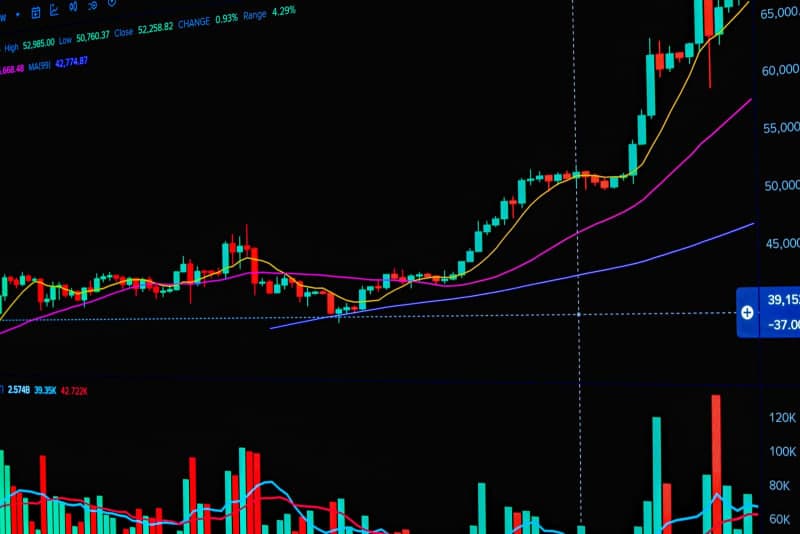
Bitcoin opened 2026 near $87,570, fell hard, then recovered roughly 47% from its low to trade in the mid-$80,000s in early October, briefly touching $87,000 three times in two weeks before sellers pushed it back. As of this writing it sits around $81,000–86,000, with the total crypto market at about $2.92 trillion and Bitcoin accounting for roughly 59% of it. Ethereum, the second-largest asset, trades near $2,693. Sentiment reads 73 on the Fear and Greed Index: firmly in "greed" territory, which contrarians treat as a caution flag rather than a green light.
The institutional story hit a speed bump in early October: US spot Bitcoin ETFs drew just $82.9 million in the week of September 28 to October 2, down 96.5% from $2.386 billion the prior week, with BlackRock's IBIT the only major fund still taking in money. Over the past year, IBIT is down about 33%. That is the asset class in miniature: genuine adoption, violent reversals, often in the same month.
What has actually changed since the last cycle
Several things are genuinely different from the 2021 mania:
ETFs normalized access. Canada approved the first North American Bitcoin ETFs back in 2021, including the Purpose Bitcoin ETF, and the US followed with spot Bitcoin ETFs in 2024. You can now buy Bitcoin exposure through a regular brokerage account, hold it in registered accounts, and skip wallets, seed phrases, and exchanges entirely. For most beginners, this is the simplest on-ramp.
Regulation grew up, partially. In Canada, crypto trading platforms must register with provincial securities regulators and CIRO, the national investment-industry regulator. In March 2026, Parliament gave Royal Assent to a federal Stablecoin Act, which will eventually put the Bank of Canada in charge of registering stablecoin issuers and supervising them. But the Act is not yet in force: no start date has been set and no issuer registry exists, so no stablecoin is actually supervised under it yet. Separately, the OECD's crypto tax reporting framework is inside Bill C-31, which was still at the finance committee stage as of summer 2026. The direction is clear; the destination is not reached.
The ecosystem around money is changing too. Stablecoins are entering payment systems and tokenized assets are approaching regulated markets, part of the broader modernization of Canadian finance that includes open banking going live. The April 2024 Bitcoin halving, which cut new supply issuance in half, also continues to shape the supply backdrop, as it has in every cycle.
What has not changed: volatility, leverage liquidations, hacks, and the fact that no regulator can reverse a blockchain transaction.
How Canadians buy crypto: the regulated path
You have three main routes, in increasing order of complexity:
- Crypto ETFs through your brokerage. Buy a Canadian Bitcoin ETF (or a US spot ETF) inside your Wealthsimple, Questrade, or bank brokerage account, including inside a TFSA or RRSP. You pay a management fee, you never touch a wallet, and the tax treatment follows normal securities rules. For beginners, this is usually the sanest choice.
- Registered Canadian platforms. Wealthsimple Crypto, Coinbase Canada, Kraken, Bitbuy, NDAX, Shakepay, and Bull Bitcoin are among the platforms registered to operate in Canada. Registration means regulatory oversight of custody and operations; it does not mean your funds are insured or guaranteed.
- Self-custody. Buying on a platform and withdrawing to your own hardware wallet gives you full control and full responsibility. Lose the recovery phrase and the assets are gone forever. This is for larger amounts and experienced users, not for a first $200 purchase.
Whichever route you choose: enable two-factor authentication (app-based, not SMS), use a unique password, and start small while you learn the mechanics of buying, withdrawing, and record-keeping.
The risks, stated plainly
Prominent, as promised.
Volatility can erase years of gains in months. Bitcoin is down roughly a third over the past year even after a 47% recovery from its lows. Altcoins routinely fall 70–90% in bear markets and many never recover. If you cannot watch your position halve without panic-selling, your position is too big.
Transactions are irreversible. Send crypto to the wrong address and it is gone. No bank to call, no chargeback, no fraud department. This single property causes more beginner losses than market moves do.
Exchanges can fail. QuadrigaCX's 2019 collapse stranded over $190 million of Canadian customer funds and remains the defining lesson: assets left on an exchange are an unsecured loan to that exchange. Prefer registered platforms, and do not leave large balances sitting on any of them.
Scams are industrial-scale. Pig-butchering schemes (romance-plus-investment fraud), fake exchanges, impersonation of real platforms, and "guaranteed return" pitches target Canadians constantly. No legitimate investment guarantees returns, no real support agent will ask for your seed phrase, and anyone promising to double your crypto is stealing it.
Leverage is how accounts go to zero. Perpetual futures and margin products can liquidate your entire position on a small adverse move. Beginners should not touch them.
Taxes: the part beginners forget
The CRA treats cryptocurrency as a commodity, not currency, and it taxes accordingly:
- Capital gains treatment applies to most investors: only a portion of your gain is included in taxable income. current capital gains inclusion rate for crypto in 2026.
- Business income treatment applies if you day-trade, mine at scale, or run a crypto business: then gains are fully taxable as income.
- Every disposition is taxable. Selling for dollars, swapping one coin for another, and buying goods with crypto are all taxable events. Moving coins between your own wallets is not.
- Keep records from day one. Date, amounts in CAD, fees, and wallet addresses for every transaction. Exchanges provide histories, but they will not reconstruct your taxes for you. Our year-end money checklist covers organizing investment records before December 31.
The incoming crypto reporting framework (CARF), once Bill C-31 passes, will eventually have platforms reporting user activity directly to the CRA. The era of assuming crypto is invisible to tax authorities is ending.
A sensible starter framework
If you decide crypto belongs in your financial life, this is the shape of a careful start:
- Foundations first. Emergency fund, high-interest debt handled, retirement contributions on track. Crypto is a satellite, never the core.
- Size it to survive. An amount you could lose completely without changing your plans, commonly framed as 1–5% of an investment portfolio.
- Use the regulated path. A Canadian ETF or a registered platform, not a link from a stranger's DM.
- Bitcoin and Ethereum before everything else. They have the longest track records, the deepest liquidity, and the most institutional infrastructure. The further down the market-cap list you go, the closer you get to gambling.
- Secure it proportionally. Small starter amounts can sit on a registered platform with 2FA; larger amounts belong in self-custody with a hardware wallet and a properly stored recovery phrase.
- Write down your plan. Under what conditions would you sell? Revisit annually, not hourly.
Practical next steps
- Learn before you buy. Understand what a blockchain is, what a wallet is, and why transactions cannot be reversed. An hour of reading prevents most beginner mistakes.
- Choose your route. For most Canadians, a Bitcoin ETF in a TFSA through an existing brokerage is the lowest-friction start.
- Verify registration. If using a platform, confirm it is registered with Canadian securities regulators before depositing funds.
- Start small and practice. Buy a small amount, practice withdrawing to your own wallet, and confirm you can do it safely before committing more.
- Set up tax records immediately. A simple spreadsheet, updated with every transaction, in Canadian dollars.
- Revisit yearly. Crypto allocations drift fast; rebalance back to your target instead of letting a rally decide your risk level for you.
The bottom line
Crypto investing in 2026 is more accessible and more regulated than ever in Canada: ETFs in registered accounts, registered platforms, and a Stablecoin Act on the books. It is also just as volatile, just as irreversible, and just as attractive to scammers as ever. Bitcoin near the mid-$80,000s after a 47% recovery tells you everything about the opportunity and the danger in one number. If you participate, do it small, do it on the regulated path, keep immaculate tax records, and never invest money you need. The technology may be the future of money; your rent money should not be the bet that proves it.
Sources
- https://volity.io/news/crypto-market-2026-bitcoin/
- https://volity.io/news/crypto-october-bitcoin-etfs-risks/
- https://www.cryptotraders.com/blog/bitcoin-stalls-87k-etf-demand-collapses
- https://bproud.blog/crypto-market-today-2026-10-06/
- https://wikicrypto.news/regulation/canada/
- https://u.today/sec-and-cftc-push-forward-on-crypto-rules-what-bitcoin-xrp-and-altcoin-holders-must-know
Quick answers
Frequently asked questions
01
How much is Bitcoin worth in October 2026?
Bitcoin traded roughly between $81,000 and $87,000 USD in early October 2026, after recovering about 47% from its recent low but still below its 2026 opening level near $87,570. The total crypto market was worth about $2.92 trillion, with Bitcoin making up about 59% of it. Prices move fast: treat any figure as a snapshot, not a quote.
02
Is crypto legal in Canada?
Yes. Buying, selling, and holding crypto is legal in Canada. Trading platforms must register with securities regulators and CIRO, and since March 2026 a federal Stablecoin Act has been on the books (though not yet in force). Crypto gains are taxable under CRA rules.
03
Where can Canadians buy Bitcoin safely?
Use a platform registered with Canadian securities regulators, such as Wealthsimple Crypto, Coinbase Canada, Kraken, Bitbuy, NDAX, Shakepay, or Bull Bitcoin. Registration is not a guarantee, but unregistered offshore platforms are where most Canadian losses to fraud and collapses have happened.
04
How does the CRA tax cryptocurrency?
The CRA generally treats crypto gains as capital gains, meaning only a portion of the gain is taxable, or as business income if you trade frequently, mine, or run a crypto business. current capital gains inclusion rate for crypto in 2026. Every sale, swap, and purchase made with crypto is a taxable event, so keep records from day one.
05
Are Bitcoin ETFs available in Canada?
Yes. Canada approved the first North American Bitcoin ETFs in 2021, including the Purpose Bitcoin ETF, and US spot Bitcoin ETFs launched in 2024. ETFs let you hold Bitcoin exposure inside a TFSA or RRSP through a regular brokerage, avoiding wallets and exchanges entirely.
06
How much of my portfolio should be in crypto?
There is no correct number, but the conventional starter guidance is a small allocation you could lose entirely without changing your life, often cited as 1 to 5% of an investment portfolio. Crypto should come after an emergency fund and core retirement savings, not before.