
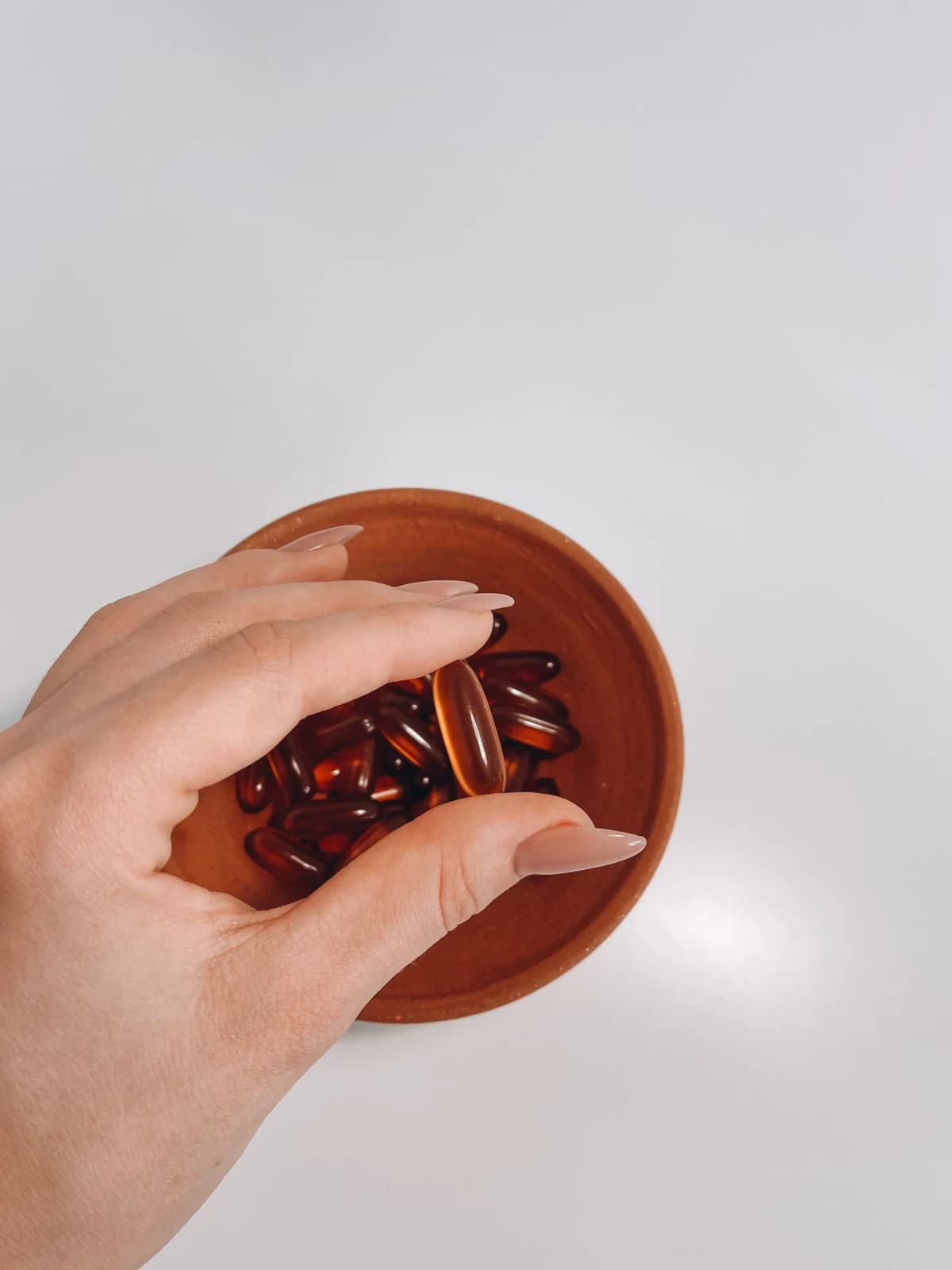
Every October, Canada enters a months-long vitamin D drought. From roughly October through April, the sun sits too low in the sky for your skin to make meaningful amounts of the vitamin, no matter how long you stand outside. About one in five Canadians is already deficient, and this winter is the first one under Health Canada's new fortification rules, which doubled the vitamin D in milk and margarine as of December 31, 2025.
So does the new fortified milk solve the problem? The short answer is no, and the math is not close. Here is what changed, how much you actually need, and why most Canadians still need a supplement through the winter.
Key takeaways
- Winter sunlight in Canada (roughly October to April) does not produce meaningful vitamin D, the UVB rays are too weak at northern latitudes.
- New rules effective December 31, 2025 approximately doubled vitamin D in cow's milk and margarine; one cup of milk now provides roughly 200 IU (5 mcg).
- Even at the new levels, you would need about five cups of milk a day to reach 1,000 IU, which is why experts still recommend a supplement.
- The Canadian Cancer Society recommends adults consider 1,000 IU/day in fall and winter; Osteoporosis Canada recommends 400–1,000 IU for adults under 50 and 800–2,000 IU for adults over 50.
- Vitamin D3 (cholecalciferol) is the preferred supplement form over D2. The tolerable upper limit is 4,000 IU/day from all sources.
1. Why winter sun gives you nothing
Vitamin D is nicknamed the sunshine vitamin because most of the body's supply is normally made in the skin, when UVB rays convert a cholesterol precursor into vitamin D3. The catch is latitude. At northern latitudes above about 35°, winter sunlight does not contain enough UVB for vitamin D production, and all of Canada sits above that line.
Practically, that means from October through April, Canadians make essentially no vitamin D from sun exposure. Sunscreen, darker skin tone, older age, and extensive clothing coverage reduce production further even in summer. Health Canada's dietary guidance explicitly assumes minimal sun exposure for this reason. If you are feeling the darker months in your mood and sleep too, our guide at guide to surviving the early darkness covers the light-exposure side of the equation.
This is not a lifestyle failure, it is geography. Diet and supplements are the only levers available for half the year.
2. What changed: the new fortification rules
Canada has required vitamin D fortification of milk and margarine for decades, but the levels were set generations ago. In 2022, Health Canada published new regulations to approximately double the required vitamin D in cow's milk and margarine, and to roughly double the permitted amount in goat's milk. The food industry had until December 31, 2025 to comply, so winter 2026–27 is the first winter these stronger levels are actually on shelves.
The details, from Health Canada's fortification strategy page:
- Cow's milk and margarine: required vitamin D approximately doubled. A single cup of milk now delivers roughly 5 micrograms, about 200 IU, a meaningful share of daily needs.
- Goat's milk: permitted levels roughly doubled as well.
- Plant-based beverages: fortified soy, oat and nut beverages can now match the new cow's milk level, which matters as more Canadians drink them as milk alternatives.
- Yogurt and kefir: in 2024, new regulations permitted vitamin D addition to yogurt and kefir made from dairy products, opening another fortified category.
Health Canada says it will keep monitoring Canadians' vitamin D intakes and status to decide whether further changes are needed. For now, this is the strongest food-based push the country has ever made.

3. Why fortified milk still isn't enough
Here is the arithmetic that undoes the good news. One cup of milk at the new fortification level provides about 200 IU of vitamin D. The commonly recommended winter intake is 1,000 IU a day. That means you would need roughly five cups of milk every single day, or the equivalent across margarine, yogurt and fortified beverages, to hit the target from food alone.
Very few people eat that way. The average Canadian adult gets a fraction of that from dairy, and intake drops further for anyone who is lactose intolerant, follows a dairy-free diet, or simply does not drink much milk. Fatty fish helps, a 3-ounce serving of salmon provides roughly 800 IU, but most Canadians do not eat salmon daily either. Egg yolks and cod liver oil contribute, but in modest amounts.
This is exactly why deficiency remains at roughly one in five Canadians despite decades of fortification: the food supply was designed as a backstop, not a complete solution. The doubled levels narrow the gap, but they do not close it, especially from October to April, when the sun contributes nothing and needs are highest.
4. How much you actually need
There is no single official number, because Health Canada, the Canadian Cancer Society, and Osteoporosis Canada each frame the question slightly differently. Here is the full picture, all in international units (IU), where 40 IU equals 1 microgram:
Health Canada (dietary reference intakes, assuming minimal sun): 600 IU/day for ages 1–70, 800 IU/day for adults over 70, and 400 IU/day for infants up to 12 months. Health Canada additionally advises people over 50 to take a daily vitamin D supplement of 400 IU on top of following Canada's Food Guide, since this age group finds it particularly difficult to meet needs through food alone.
Canadian Cancer Society: adults living in Canada should consider 1,000 IU/day during the fall and winter. Adults at higher risk of low levels, people 50 and older, people with dark skin, people who rarely go outside, and people whose clothing covers most of their skin, should consider 1,000 IU/day year-round, in consultation with their healthcare provider.
Osteoporosis Canada (CMAJ guideline): for adults under 50 at low risk of insufficiency, 400–1,000 IU of D3 daily; for adults 50 and older, 800–2,000 IU of D3 daily. Doses up to 2,000 IU/day are considered safe without medical supervision; above that, talk to a clinician.
The ceiling: the tolerable upper intake level is 4,000 IU/day from all sources (food plus supplements) for adults. Staying at or below 2,000 IU/day from a supplement keeps you comfortably inside every major guideline.
For most healthy adults, the practical synthesis is simple: a daily 1,000 IU D3 supplement from October through April, on top of whatever fortified foods you already eat. If you are over 50, have dark skin, or get little sun, year-round supplementation is the better default, and worth a conversation with your doctor or pharmacist, especially if you take medications that affect vitamin D metabolism.

5. D3 vs D2: pick D3
Supplements come in two forms: D3 (cholecalciferol, usually from lanolin or lichen) and D2 (ergocalciferol, plant-derived). D3 is the form your skin makes naturally, and it is the preferred choice in Canadian clinical guidance.
D2 is an option for vegans who avoid lanolin-derived D3 (lichen-based D3 now exists too), but it is no longer considered bioequivalent to D3, D3 raises and maintains blood levels of 25-hydroxyvitamin D more effectively. When you are choosing a bottle, look for "vitamin D3" or "cholecalciferol" on the label. Standard over-the-counter strengths in Canada are 400 IU and 1,000 IU tablets, plus liquid drops (useful for children and anyone who dislikes pills).
One caution: very high-dose "bolus" products (10,000–50,000 IU capsules) exist for treating diagnosed deficiency under medical supervision. They are not daily vitamins. Do not self-prescribe megadoses, vitamin D is fat-soluble, it accumulates, and excess can cause high blood calcium.
6. Who is at the highest risk
Deficiency is not evenly distributed. Pay closest attention if any of these describe you:
- Adults over 50, particularly over 70, skin production declines with age and needs rise.
- People with dark skin, melanin slows vitamin D synthesis, so more exposure is needed for the same production.
- People who are rarely outdoors, shift workers, long-term-care residents, anyone housebound through winter.
- People whose clothing covers most of their skin for cultural or religious reasons.
- Breastfed infants, Health Canada's guidance includes 400 IU/day for infants up to 12 months (800 IU/day in northern Indigenous communities in winter); formula is already fortified.
- People with conditions affecting fat absorption (celiac disease, Crohn's, bariatric surgery) or on medications such as certain anticonvulsants and corticosteroids.
If you fall into several of these categories, a blood test for 25-hydroxyvitamin D through your doctor can establish your baseline, though routine testing is not recommended for low-risk adults under 50.
Practical next steps
- Start a daily 1,000 IU vitamin D3 supplement now, in October, levels build over weeks, so starting before the darkest months matters more than the exact date.
- Keep drinking fortified milk or fortified plant beverages; the new doubled levels help, but treat them as a top-up, not the plan.
- Eat vitamin D–rich foods weekly: salmon, sardines, mackerel, egg yolks.
- If you are over 50, have dark skin, or rarely get sun, plan on year-round supplementation and mention it at your next checkup.
- Store supplements at room temperature away from humidity; check the expiry date, old bottles lose potency.
- Pair this with the rest of your winter health routine, our guide at fall vaccines guide for Canada covers this season's flu, COVID and RSV shots.
The bottom line
Health Canada's doubled fortification is genuine progress, a cup of milk now does roughly twice the work it used to. But five cups a day is not a realistic diet, winter sun contributes nothing, and one in five Canadians is already deficient. A daily 1,000 IU D3 supplement from October through April remains the simplest, cheapest way to close the gap. It costs a few cents a day and takes five seconds.
This article is general health information for a Canadian audience, current as of October 2026, not medical advice for your situation. Supplement needs vary with age, skin tone, health conditions, and medications. Talk to your doctor or pharmacist before starting or changing supplements, especially if you are pregnant, breastfeeding, managing a chronic condition, or taking prescription medication.
Sources
- Health Canada, Fortified foods: Canada's approach to fortification
- Osteoporosis Canada, Vitamin D in adult health and disease (CMAJ guideline)
- Osteoporosis Canada, Guideline summary (CMAJ)
- RxFiles, Vitamin D Overview Q&A (Saskatchewan drug information)
- Public Health Agency of Canada, Osteoporosis and related fractures in Canada
- News-Medical, Canadians should consider taking Vitamin D during fall and winter months (Canadian Cancer Society recommendation)
Quick answers
Frequently asked questions
01
How much vitamin D do I need in winter?
The guidance differs by source. Health Canada: 600 IU/day for ages 1–70 and 800 IU/day for adults over 70 (400 IU for infants), plus a daily 400 IU supplement advised for people over 50. The Canadian Cancer Society: adults should consider 1,000 IU/day during fall and winter. Osteoporosis Canada: 400–1,000 IU of D3 daily for adults under 50, 800–2,000 IU for adults 50 and older. The tolerable upper limit is 4,000 IU/day from all sources.
02
Is 1,000 IU of vitamin D enough in winter?
Per the post's practical synthesis, a daily 1,000 IU D3 supplement from October through April, on top of whatever fortified foods you already eat, is the recommended default for most healthy adults. If you are over 50, have dark skin, or rarely get sun, year-round supplementation is the better default, and worth discussing with your doctor or pharmacist, especially if you take medications that affect vitamin D metabolism.
03
Do I still need a supplement if I drink fortified milk?
Yes. The new fortification rules (effective December 31, 2025) approximately doubled vitamin D in milk, one cup now provides roughly 200 IU, but you would need about five cups of milk a day to reach 1,000 IU from food alone. Very few people eat that way, which is why deficiency sits at roughly one in five Canadians despite decades of fortification. Treat fortified milk as a top-up, not the plan.
04
Should I take vitamin D3 or D2?
D3 (cholecalciferol), it is the form your skin makes naturally and the preferred choice in Canadian clinical guidance. D2 is an option for vegans who avoid lanolin-derived D3 (lichen-based D3 also exists), but it is no longer considered bioequivalent to D3: D3 raises and maintains blood levels of 25-hydroxyvitamin D more effectively. When choosing a bottle, look for "vitamin D3" or "cholecalciferol" on the label.